
A Classroom Reflection
Now that my Year 11 students have gone on study leave because of their GCSE examinations, I have been given some additional classes to teach. One of those classes is a year 7 class.
I have taught for about 16 years. In that time, I have taught across different key stages, worked with students of different abilities, supported young people with complex needs, managed challenging behaviour, and seen many versions of what a difficult classroom can look like.
But this particular Year 7 class has reminded me of my earliest days in teaching.
Not because I have forgotten how to teach. Not because I have suddenly lost my classroom presence. Not because I no longer understand behaviour management.
But because this class has forced me to confront, again, one of the hardest truths about teaching: sometimes, a class does not respond quickly to the things that usually work.
This is not a case of two students disrupting learning. It is not even five students. It feels like a whole-class culture of disruption, low self-regulation, weak listening habits, and very little shared understanding of what learning time should look like. There are about 30 students in the room, and the challenge is not simply managing individuals; it is trying to shift the atmosphere of the whole classroom.
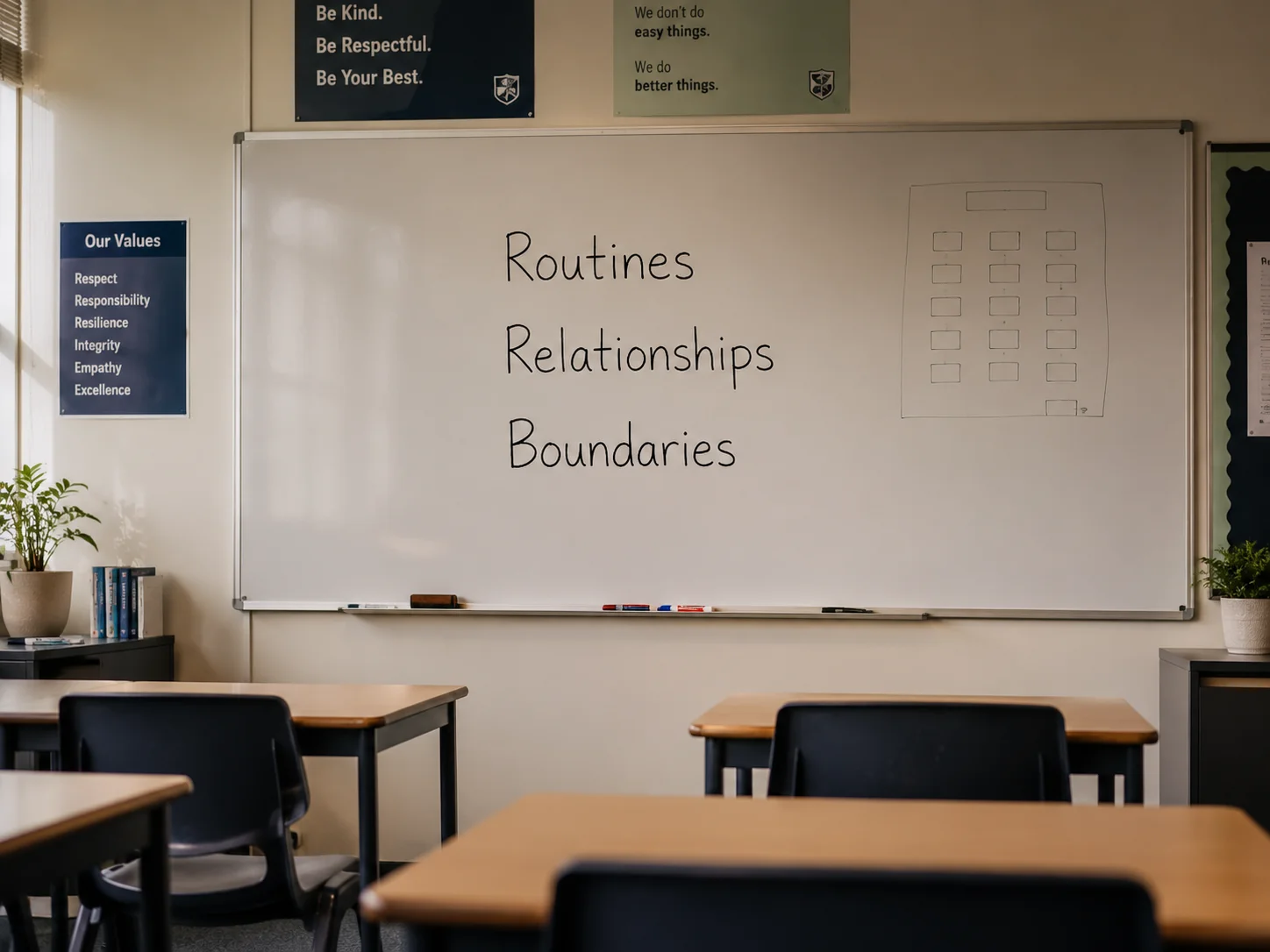
I have changed the seating plan twice already. I have worked with the teaching assistant, who also supports them in their Maths lesson. I have tried to understand the dynamics of the class. I have attempted to identify the key influencers, separate students who trigger each other, and build routines that might help the lesson settle.
So far, I cannot honestly say I have achieved the success I wanted.
That is difficult to admit.
As teachers, especially experienced teachers, we sometimes feel pressure to appear as though we have everything under control. We know the strategies. We know the behaviour policy. We know how to give instructions, circulate the room, use sanctions, praise the right behaviour, redirect, reset, and repair.
But teaching is not a performance of perfection. It is a human profession, and some classes expose the gap between what we know in theory and what we can actually secure in practice.
This Year 7 class has made me reflect on three things.
First, behaviour is never just about behaviour. What we see in the classroom is often the outcome of habits that have already been formed elsewhere: habits of listening, respect, concentration, resilience, response to authority, and belief about school. By the time a teacher meets a class, that class already has a culture. The teacher’s job is not only to teach content but, in some cases, to rebuild the conditions that make teaching possible.
Second, seating plans are useful, but they are not magic. A seating plan can reduce friction. It can separate unhelpful combinations. It can give structure. But if the issue is whole-class culture, then the solution cannot be only spatial. Moving students around the room does not automatically move them into maturity, self-discipline, or learning readiness.
Third, experience does not exempt a teacher from struggle. In fact, the longer I teach, the more I realise that experience gives you perspective, not immunity. It helps you avoid panic. It gives you a wider toolkit. It reminds you that one bad lesson or one difficult class does not define your competence. But it does not remove the challenge.
I have found myself thinking: I am back to my early days in teaching.
And perhaps that is not entirely a bad thing.
The early days of teaching are uncomfortable because they humble you. They force you to observe more carefully. They make you question your assumptions. They remind you that every class has to be taught as they are, not as you wish them to be. They also remind you that behaviour management is not a one-off intervention; it is a sustained campaign of routines, relationships, boundaries, follow-through, and collective support.
What I must not do is take the behaviour personally. That is easier said than done. When you prepare a lesson and the lesson is constantly interrupted, it can feel like rejection. When students talk over you, ignore instructions, or undermine the learning environment, it can feel disrespectful. And, to be clear, it often is disrespectful.
But the professional response cannot simply be frustration. The professional response must be diagnosis.
What exactly is happening?
Who leads the disruption?
Who follows?
At what point in the lesson does the behaviour escalate?
Are the instructions too long?
Is the task too open?
Do they need tighter routines?
Do they need more immediate accountability?
Are there students who want to learn but are being drowned out?
What support exists beyond the classroom?
What needs to be escalated?
What needs to be repeated until it becomes normal?
I am also reminded that classroom behaviour is not solved by the classroom teacher alone. A difficult class needs consistency across the school. If students behave poorly in one lesson, there is a strong chance those habits exist elsewhere. Teachers can and should reflect on their own practice, but we must also be honest that whole-class disruption requires a whole-school response.
For now, my next step is not to despair. It is to simplify.
I need to strip the lesson back to essentials: clear entry routine, silent starter, short instructions, visible task, tight time limits, immediate follow-up, and consistent consequences. I need to identify the students who can be won over and use them as anchors. I need to keep working with the teaching assistant and gather more insight from colleagues who teach them successfully. I need to document what I have tried, what has worked even slightly, and what has not worked.
Most importantly, I need to remember that difficult classes are not solved in one lesson.
Sometimes, progress begins when the class realises that the teacher is not going away, the expectations are not changing, and the lesson will not be surrendered to chaos.
This Year 7 class has challenged me. It has humbled me. It has frustrated me. But it has also reminded me why teaching is both a craft and a calling.
After 16 years, I am still learning.
And perhaps that is the most honest reflection of all.